How to Plan Private Mountain Retreats for Executive Teams
Updated: Aug 31
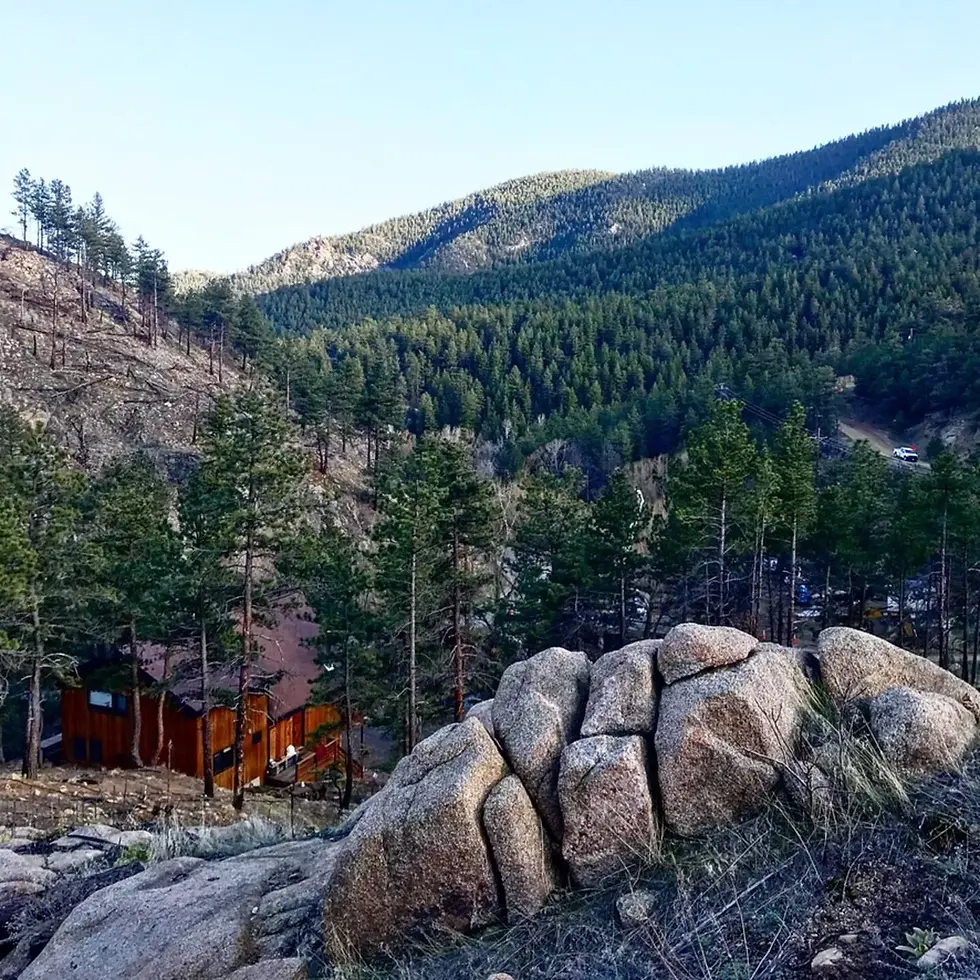
Private mountain retreats for executive teams are off-site leadership gatherings held at secluded mountain properties, designed to combine strategic work sessions with nature-based restoration. The best ones remove leaders from the office entirely, placing them in environments where altitude, quiet, and physical space do what no boardroom can: reset thinking, rebuild trust, and surface the kind of candid conversation that drives real organizational change.
Executive mountain retreats work best when the venue handles the full team without splitting people across hotels. Prioritize properties with on-site lodging for your entire group.
Colorado's Front Range, anchored by Boulder and the Indian Peaks Wilderness, offers year-round accessibility from Denver International Airport (roughly 50 minutes) with four distinct seasonal experiences for retreat planning.
Budget benchmarks for private mountain retreats typically range from $500 to $1,500 per person per day, depending on venue exclusivity, catering level, and activity programming.
According to AirDNA Boulder Market Data 2026, top-performing Boulder-area luxury STRs achieve average daily rates above $857, with peak summer months (July and August) commanding the highest occupancy and rates.
The single biggest planning mistake is under-specifying technology needs. Hybrid meeting capability, bandwidth minimums, and AV specs must be confirmed before signing any retreat contract.
Nature-based environments measurably support executive performance recovery. Building 90-minute unstructured outdoor blocks into the agenda is not optional programming; it is the scientific core of a well-designed leadership retreat.
Why Do Executive Teams Benefit from Mountain Retreats?
Mountain retreats for executive teams refer to structured off-site programs that use natural, high-altitude settings to facilitate leadership alignment, strategic thinking, and team cohesion. Research in environmental psychology consistently links nature immersion with reduced cortisol levels, improved working memory, and higher-quality collaborative decision-making, outcomes that conference rooms simply cannot replicate. For senior leaders carrying chronic cognitive load, the mountain environment itself is a therapeutic tool.
The separation from the office matters as much as the destination. When your team is three hours from headquarters with no commute home, the conversations change. Defensiveness drops. People speak plainly. That shift does not happen in a hotel ballroom fifteen minutes from the office, regardless of how good the catering is.
In 2026, corporate wellness retreat spending continues to rise as organizations recognize that executive burnout is a strategic risk, not a personal failing. Building structured recovery into the leadership calendar is increasingly how high-performing companies protect their most critical human assets.
For Denver and Boulder-based organizations, the Front Range offers a rare advantage: world-class mountain environments within a 45-minute drive of a major international airport. You get the genuine wilderness reset without a day of travel on either end.

Step 1: Define What Your Executive Retreat Actually Needs to Accomplish
Effective private mountain retreats for executive teams begin with a clear purpose statement, not a venue search. Before you look at a single property, your planning team should answer three questions: What specific leadership challenge does this retreat address? What does success look like 90 days after the retreat ends? And what balance of structured work time versus unstructured recovery time does your team genuinely need?
Most retreats fail not because the venue was wrong but because the agenda was wrong. Specifically, most corporate retreat agendas are over-programmed. Executives arrive exhausted, and a schedule packed with back-to-back sessions compounds the problem rather than solving it.
A well-designed three-day executive retreat in 2026 typically allocates roughly 40% of waking hours to structured strategy sessions, 30% to facilitated team-building or outdoor activities, and 30% to genuine unstructured time: morning coffee on a mountain deck, an afternoon hike with no agenda, an evening around a fire pit. That unstructured third is where the most important conversations happen.
Consider which of these four retreat archetypes matches your organization's current moment:
Strategic alignment retreat: Annual planning, OKR setting, long-range visioning. Best in September or January when the fiscal calendar creates a natural inflection point.
Team repair retreat: Post-merger integration, leadership transition, trust rebuilding after a difficult period. Prioritize venue privacy and facilitated evening sessions over activity programming.
Innovation sprint retreat: Product strategy, competitive repositioning, creative problem-solving. Look for venues with dedicated work spaces and strong broadband for deep-dive research sessions.
Executive wellness retreat: Burnout recovery, culture reset, leadership sustainability. The venue's spa and outdoor amenities are the core program, not the bonus.
Step 2: Choose the Right Mountain Venue for Your Team Size and Goals
Executive mountain retreat venues fall into three distinct categories, each with different strengths and trade-offs. Understanding the category before you start touring saves significant time and prevents costly mismatches between your retreat goals and the physical environment.
Whole-Property Private Rentals (Best for Teams of 8 to 16)
Private luxury properties offer the highest level of seclusion and the most natural conversation environment. When your entire team sleeps, eats, and works in the same space, the retreat culture is total. There is no hotel lobby where executives can slip away to check email alone. The shared environment is the program.
The Rusty Skillet Ranch, a custom-remodeled A-frame retreat on 12 completely private acres just 15 minutes from Boulder, is one of the strongest options in the Colorado Front Range for executive groups of up to 12. The property's 1,000-square-foot great room with 28-foot vaulted ceilings and a full wall of glass becomes a natural strategy space during the day and a gathering room in the evenings. A handcrafted dining table seats 12 beneath floor-to-ceiling windows overlooking a year-round creek. The wraparound hardwood deck, 8-person cedar barrel sauna with panoramic glass, and handmade Japanese cedar soaking tub provide exactly the kind of structured downtime that high-performance leaders need between sessions.
For retreat planning purposes, The Rusty Skillet Ranch accommodates up to 12 guests across four bedrooms, with the optional lower-level suite (an additional $250 per night) providing a private workspace with a 32-inch external monitor and its own entrance. That lower level doubles effectively as a breakout room for smaller working groups. The property sits 15 minutes from Boulder's Chautauqua Park and 40 minutes from Denver International Airport, making logistics straightforward for teams flying in from multiple cities. You can learn more about the property's wellness retreat capabilities as part of broader retreat planning research.
Boutique Mountain Lodges (Best for Teams of 15 to 30)
Properties like Rockwood Lodge in Nantahala National Forest or Devil's Thumb Ranch Resort and Spa in Tabernash, Colorado occupy the middle ground: more rooms than a private rental, but still intimate enough to maintain the retreat culture. Rockwood Lodge, for example, accommodates a full executive team in 8 on-site rooms and includes a private stocked lake for fishing and direct trail access to the Bartram Trail and Appalachian Mountains. Devil's Thumb Ranch's Main Lodge Boardroom, Timber House, and Yaeger House configurations allow for flexible meeting setups without the antiseptic feel of a hotel conference room.
Resort Conference Properties (Best for Teams Over 30)
Large-format resort properties like The Little Nell in Aspen (a Forbes Travel Guide Five Star and AAA Five Diamond property with 92 guest rooms), Four Seasons Resort and Residences Vail, and The Westin Riverfront Resort and Spa in Avon cover the enterprise tier. The Little Nell's private cellar tastings, The Four Seasons' Gore Range Suite with dining for 10, and Mountain View Grand's 20,000 square feet of flexible meeting space all speak to teams that need serious AV infrastructure and large-group logistics. The trade-off is intimacy: you share the resort with other guests, the lobby functions like a hotel lobby, and the retreat culture is harder to maintain.

Step 3: Solve the Technology and Connectivity Problem Before You Arrive
Technology and connectivity requirements are the most consistently overlooked element of executive mountain retreat planning. No competitor article addresses this directly, but it is the issue most likely to derail an otherwise well-planned retreat, particularly in 2026 when hybrid meeting capability is a baseline expectation for most executive teams.
Before signing any venue contract, confirm these four technology specifics in writing:
Dedicated bandwidth: Ask for the venue's committed upload and download speed specifically for your group's use. Shared resort WiFi that handles 200 guests simultaneously will not support four executives on simultaneous video calls. Minimum acceptable threshold for a team of 10 running hybrid sessions: 100 Mbps dedicated symmetric bandwidth.
AV equipment inventory: Confirm the exact model and screen size of any included display technology. A 75-inch 4K display in a dedicated meeting room (like the setup Devil's Thumb Ranch's Yaeger House provides) is functionally different from a 55-inch consumer TV mounted in a living room. For hybrid sessions, you need a display large enough for remote participants to read slides clearly.
Cellular backup: Mountain properties frequently have spotty cellular coverage. Ask whether the venue has a cellular signal booster or distributed antenna system. If not, identify the nearest carrier with reliable coverage and ensure key participants have compatible devices or hotspot plans as backup.
Hybrid meeting platform compatibility: Confirm that the venue's AV infrastructure supports your organization's specific platform (Zoom, Teams, Google Meet) with one-button joining. Requiring an IT setup process at the start of a retreat morning destroys the agenda and the mood simultaneously.
For smaller private properties like The Rusty Skillet Ranch, the office suite includes a dedicated workstation with a 32-inch external monitor, Apple Bluetooth peripherals, and a broadband connection. Confirm current bandwidth specs directly with the host when booking, and discuss your specific hybrid meeting needs during the booking conversation. Private property hosts are almost always more responsive to technology accommodation requests than resort conference departments.
Step 4: Plan Logistics for Getting Your Executive Team to a Remote Location
Executive retreat logistics are a legitimate planning challenge that most venue-focused articles ignore entirely. The reality is that getting eight to sixteen senior leaders to a mountain property simultaneously, particularly when they are traveling from multiple cities, requires a specific logistics strategy.
Airport and Ground Transportation
Denver International Airport is the primary gateway for Colorado mountain retreats. Denver sits roughly 45 minutes by car from downtown Boulder and 40 minutes from The Rusty Skillet Ranch. For teams flying in from multiple cities, Denver's route network makes it a practical hub. DIA handles direct flights from most major US cities, with strong connections from California, Texas, and Illinois, the three primary out-of-state visitor markets for the Boulder area, according to the Downtown Boulder Partnership's 2026 Downtown Intercept Survey.
For groups of eight or more, charter a single vehicle rather than relying on rideshare. A 15-passenger sprinter van from DIA to a Boulder-area retreat property runs roughly $400 to $600 for the transfer. The shared drive time becomes the retreat's opening session: a 45-minute conversation with no phones and Colorado scenery out the windows. It works better than any structured icebreaker.
For executives already in Denver or Boulder, Bear Canyon Trail sits 8 minutes from The Rusty Skillet Ranch, making it easy to build a pre-retreat morning hike into the first day's agenda. Chautauqua Park, 10 minutes from the property, is a more accessible option for team members who prefer a shorter, flatter walk before the first afternoon session.
Seasonal Timing and Travel Considerations
According to AirDNA's Boulder Market Overview, peak STR demand in Boulder occurs in July and August, with the absolute peak month reaching $7,643 in average monthly revenue and a 62% occupancy rate. Book at least 90 days ahead for summer retreats, as high-quality private properties in this window are claimed far in advance.
The shoulder seasons, specifically September through October and March through May, offer compelling trade-offs: lower competition for premium properties, Boulder's famous 300 days of annual sunshine still in effect, and temperatures that make outdoor programming genuinely comfortable. A September strategic planning retreat pairs well with the post-summer reset; a May retreat catches the property before peak pricing while wildflower season makes every hike memorable.
January through March is the lowest-demand period for Boulder STRs (average occupancy drops to roughly 33%, per AirDNA 2026 data), which creates negotiating room on rates for teams specifically seeking a ski-and-strategy combination. Eldorado Canyon State Park is 20 minutes from The Rusty Skillet Ranch, and Rocky Mountain National Park is about 90 minutes north, both accessible even in winter with proper planning.
Step 5: Build an Agenda That Actually Balances Work and Recovery
Executive retreat agendas for mountain settings require a fundamentally different structure than standard off-site conference programs. The mountain environment creates a unique rhythm: mornings are naturally energizing (crisp air, early light, wildlife), afternoons are productive (post-lunch focus in a quiet space), and evenings around a fire create the candid conversation that the retreat exists to enable. Your agenda should map to that rhythm rather than fight it.
A Practical Three-Day Framework
Day | Morning (7am to noon) | Afternoon (noon to 5pm) | Evening (5pm to 10pm) |
Day 1 | Arrival, property orientation, light hike or sauna session to decompress from travel | Opening strategy session: current state assessment, key challenges surfaced | Private chef dinner at the property, open conversation, no agenda |
Day 2 | Optional sunrise hike or morning sauna, breakfast together, 90-minute deep-work session | Facilitated working sessions, small-group breakouts in the lower-level suite, mid-afternoon outdoor break | Structured social activity (fire pit, hot tub rotation), shared dinner, informal debrief |
Day 3 | Final strategic session: commitments, ownership, 90-day action plan | Closing lunch, optional group activity (day hike toward Flatirons, 12 minutes from the property), departures | N/A: most teams depart by 4pm |
The outdoor shower at The Rusty Skillet Ranch, which overlooks a year-round creek through the forest, is a small detail that lands differently than you might expect. On the second morning, after a first full day of sessions, standing under an outdoor shower in mountain air with creek sounds is the kind of sensory reset that no team-building exercise can replicate. Schedule morning free time generously and let the environment do its work.
Step 6: Build the Business Case and Budget for Your Executive Retreat
The ROI case for executive mountain retreats is an area where corporate retreat planning content consistently falls short. Most venue articles assume the decision is already made. In practice, retreat planners often need to justify the expense to a CFO or board, and having a structured business case matters.
Typical Budget Benchmarks
Private mountain retreat budgets for executive teams of 8 to 12 typically break down as follows:
Budget Category | Typical Range (per person, per day) | Notes |
Venue/lodging | $150 to $400 | Higher for whole-property private rentals in peak season |
Catering/meals | $100 to $250 | Private chef service runs higher; grocery-stocked kitchen runs lower |
Facilitation | $75 to $200 | External facilitator day rates typically $2,000 to $6,000 total |
Activities and programming | $50 to $150 | Guided hikes, sauna sessions, local experiences |
Transportation | $50 to $100 | Airport transfers, group vehicle for the retreat duration |
Total range | $425 to $1,100 per person/day | Three-day retreat for 10 people: roughly $12,750 to $33,000 total |
For context, the cost of a three-day executive retreat is typically less than the combined hourly cost of the same leaders sitting in their respective offices for those same three days, when fully-loaded compensation is factored in. The ROI question is not whether the retreat costs money; it is whether it produces alignment and decisions that save more than it costs. A single avoided strategic misstep or a six-month acceleration in a key initiative typically returns the full retreat investment many times over.
How to Make the Business Case to a CFO
Frame the investment around three measurable outcomes. First, decision velocity: how many strategic decisions that have been pending for more than 60 days get resolved during the retreat? Assign a rough dollar value to each resolved decision based on the revenue, cost, or risk implications. Second, leadership retention: executive turnover is extraordinarily expensive. A well-designed annual retreat is a meaningful retention signal, particularly for senior leaders who value environments where they can think clearly. Third, team cohesion: high-trust leadership teams make faster decisions with fewer approval cycles. Estimate the overhead reduction of a 20% improvement in cross-functional decision speed for your specific team.

Step 7: Incorporate Wellness Programming That Actually Works for Executives
Executive wellness programming at mountain retreats refers to structured and unstructured physical and sensory experiences designed to restore cognitive capacity in high-performance leaders, not spa amenities added to a conference agenda as an afterthought. The science here is specific: nature immersion reduces cortisol, thermal contrast (alternating heat and cold exposure through sauna and cold-water immersion) supports parasympathetic nervous system recovery, and reduced ambient noise measurably improves creative problem-solving within 30 to 60 minutes of onset.
For teams that want to explore the broader landscape of Colorado's wellness retreat options, the True Wellness Retreat Colorado guide covers the spectrum of nature-based programming available across the state.
The Case for Thermal Contrast Programming
Specifically, the sauna-and-cold-exposure sequence is the single most effective 45-minute wellness protocol available at a mountain retreat property. The 8-person cedar barrel sauna at The Rusty Skillet Ranch, which features a HUUM stone heater and panoramic glass wall with mountain views, creates an ideal setting for 15 to 20 minutes of heat exposure followed by a cold outdoor shower or brief immersion in the property's year-round creek. This sequence, repeated two to three times across a retreat stay, produces the kind of physical depletion and subsequent recovery that executives who exercise regularly describe as one of the most restorative experiences of their professional lives.
You can read more about the specific properties and science of Japanese cedar hot tub and barrel sauna experiences in Boulder as you plan your wellness programming.
Outdoor Activity Programming
Boulder's trail network provides immediate programming without advance booking. Bear Canyon Trail, 8 minutes from The Rusty Skillet Ranch, handles groups of all fitness levels with a moderate gradient and consistent scenery. Chautauqua Park, 10 minutes away, is the right choice for larger mixed-ability groups who want the Flatirons backdrop without committing to a technical climb. For teams that want a more memorable shared challenge, the approach to the Flatirons from Chautauqua takes roughly 90 minutes round-trip and produces the kind of shared physical experience that is genuinely hard to recreate in an office setting. According to the Boulder hiking guide from the Official Boulder Colorado USA tourism website, the area offers over 300 miles of maintained trails within the city's open space system.
Frequently Asked Questions About Private Mountain Retreats for Executive Teams
How far in advance should you book a private mountain retreat for an executive team?
For peak summer dates (June through August) in the Boulder and Colorado Front Range area, book at least 90 days in advance. High-quality whole-property private rentals accommodate groups of 8 to 12 and are claimed well ahead of the peak season. According to AirDNA Boulder Market Data 2026, the average booking lead time for Boulder STRs is 64 days, but premium properties in the top performance tier book faster. For shoulder-season retreats in September or May, 60 days is a reasonable minimum lead time.
What is a realistic budget for a three-day executive mountain retreat for 10 people?
A realistic all-in budget for a three-day executive mountain retreat for 10 people ranges from roughly $12,750 to $33,000 total, or $425 to $1,100 per person per day. That range covers venue/lodging, meals, facilitation, activities, and ground transportation. Private whole-property venues typically run $150 to $400 per person per day for lodging alone. The wide range reflects differences in facilitation quality, catering approach, and activity programming rather than venue exclusivity alone.
Can a private mountain rental property handle the work and meeting requirements of an executive team?
Yes, when selected carefully. The key criteria are dedicated broadband (minimum 100 Mbps symmetric for hybrid sessions), a large enough gathering space to seat the full team comfortably, at least one private breakout area for smaller working groups, and display technology adequate for presentations and video calls. Properties like The Rusty Skillet Ranch in Boulder include a dedicated office suite with a 32-inch external monitor, a 1,000-square-foot great room that functions naturally as a main session room, and a lower-level suite available as a private breakout space.
What is the best season for an executive mountain retreat near Boulder, Colorado?
September and October offer the strongest combination of weather, availability, and pricing. Temperatures in Boulder's mountain foothills range from 50 to 75 degrees Fahrenheit in September, making outdoor programming consistently comfortable. Peak summer rates drop, competition for premium private properties eases, and the post-summer timing aligns naturally with annual strategic planning cycles. For teams specifically seeking a ski-and-strategy format, January through March works well and corresponds to the lowest-demand period for Boulder STRs, which creates flexibility on pricing and availability.
How do you handle executives who do not participate in outdoor activities?
Design all outdoor programming as optional and parallel with an equally appealing indoor alternative. On a hike morning, ensure the property's indoor spaces are just as inviting: a fire in the great room, coffee available, and quiet space for individual reflection or reading. The goal of outdoor programming is not universal participation; it is providing a genuine option that some executives will find deeply restorative. Forcing participation destroys the retreat culture faster than any logistical failure.
What technology should you confirm before booking an executive mountain retreat venue?
Confirm four specifics before signing: dedicated bandwidth (not shared resort WiFi), exact AV equipment specifications for any meeting rooms, cellular signal availability or a booster system on the property, and your video conferencing platform's compatibility with the venue's display infrastructure. Remote mountain properties can have limited cellular coverage, so having a confirmed backup plan for connectivity is essential for any hybrid team sessions or urgent business that arises during the retreat.
Are private mountain retreats for executive teams more effective than resort conference centers?
For teams of 8 to 16, private whole-property retreats consistently produce stronger cultural outcomes because the shared physical environment creates total immersion. When the entire team sleeps, eats, and works in the same space, with no other hotel guests, public lobbies, or external distractions, the retreat culture is complete rather than partial. Resort conference centers are more appropriate for larger groups (30-plus) that require significant AV infrastructure, multiple breakout rooms, and on-site food-and-beverage staff.
Planning Your Executive Mountain Retreat: The Right Property Makes the Difference
Private mountain retreats for executive teams succeed or fail based on the clarity of the purpose, the quality of the environment, and the logistics that enable the team to arrive fully present. The planning framework above covers each element in sequence because the order matters. Define the goal before the venue. Solve technology before the agenda. Build the business case before the budget conversation.
Colorado's Front Range, and the Boulder area specifically, remains one of the most accessible high-quality mountain retreat destinations in the country in 2026, combining proximity to Denver International Airport with genuine wilderness seclusion and a robust support ecosystem for group experiences. The combination of serious hiking terrain, world-class dining accessible within 15 minutes, and the thermal wellness programming available at properties like The Rusty Skillet Ranch makes this corridor worth serious consideration for any executive team within flying distance of Denver.
The best retreat your team will ever take is the one where the environment does half the work for you. Choose a setting where the mountains, the quiet, and the quality of the space itself communicate that this time together matters. Everything else follows from that.

If you are planning a private mountain retreat for your executive team and want a venue that combines genuine seclusion with the kind of craftsmanship that makes leaders actually exhale, The Rusty Skillet Ranch is worth a serious look. The 12 private acres, cedar barrel sauna, and chef's kitchen create the environment; your team brings the agenda. Check availability and dates here.


Comments