Boulder Dining & Food Guide: Where Locals Actually Eat
Updated: Aug 31
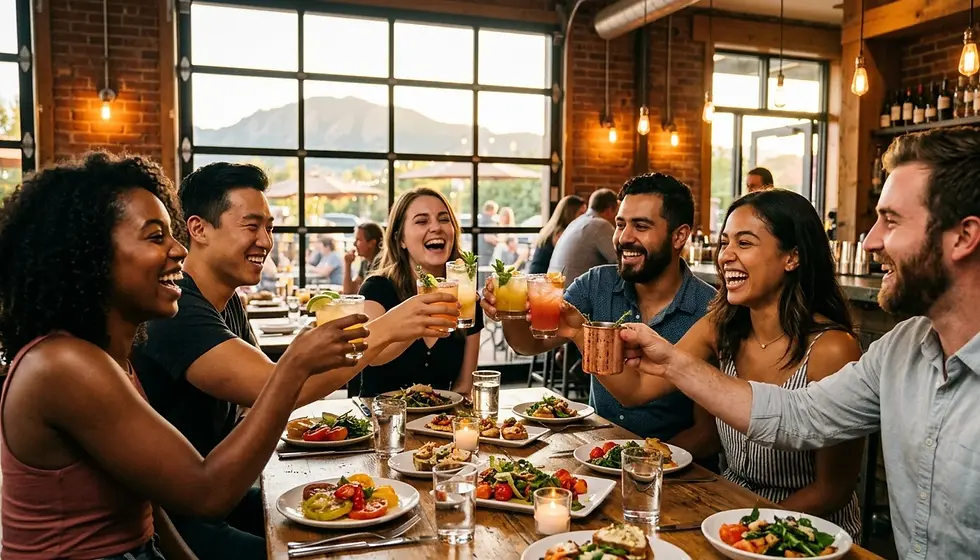
Boulder dining and food refers to one of the most distinctive culinary scenes in the American West: a city of roughly 105,000 people that Bon Appétit named America's Foodiest Town and that Forbes recognized as one of five secret foodie cities. From James Beard-nominated farm-to-table kitchens to Nepalese dumplings and cold-pressed juice bars, Boulder offers a depth of dining that genuinely surprises first-time visitors.
Boulder's dining scene spans James Beard-recognized fine dining, global street food, and wellness-focused cafes concentrated along Pearl Street Mall and the Hill neighborhood.
Cuisine type is the top factor in Boulder restaurant choice, followed by ambiance, according to the 2026 Downtown Boulder Intercept Survey.
Half of all downtown Boulder visitors report eating a meal while in the city center, and out-of-state visitors spend nearly double per visit compared to local residents.
Dining out inflation reached 3.9% in early 2026, making value-conscious choices and reservation planning more important than ever for Boulder visitors.
The best Boulder restaurants typically require reservations 1-2 weeks in advance on weekdays, and 2-3 weeks for weekend dining at top spots like Frasca Food and Wine.
The Rusty Skillet Ranch sits 15 minutes from Pearl Street, giving guests a private mountain base with a chef's kitchen for slow mornings before heading downtown to eat.
Table of Contents
What Is Food and Dining in Boulder, Colorado?
Food and dining in Boulder, Colorado refers to a culinary ecosystem shaped by proximity to Colorado farms, a highly educated population, and a decades-long wellness culture that prizes ingredient quality over trend-chasing. Boulder dining is defined by farm-to-table sourcing, global ingredient diversity, and a higher-than-average concentration of independently owned restaurants relative to its population size.
Specifically, Boulder's restaurant scene clusters into three geographic zones. Pearl Street Mall and its surrounding blocks host the highest density of fine dining and chef-driven casual spots. The Hill neighborhood near the University of Colorado Boulder attracts more affordable, globally diverse options. South Boulder and the Table Mesa area lean toward neighborhood breakfast spots and wellness cafes.
As of 2026, dining out inflation of 3.9% has nudged more visitors toward mid-range options and prix-fixe menus, according to data from Inntopia via Summit Daily. That makes knowing which restaurants deliver genuine value especially important. The 2026 Downtown Boulder Intercept Survey found that cuisine type was the top driver of restaurant choice among visitors, followed closely by ambiance. Price sensitivity ranked third, which means Boulder diners prioritize the experience, but they are paying more attention to what they get for their dollar than in prior years.

What Are the Best Restaurants in Boulder for Fine Dining?
The best fine dining restaurants in Boulder include Frasca Food and Wine, The Kitchen Boulder, and Blackbelly, all of which have received James Beard Award recognition and consistently represent the top of Colorado's restaurant industry. These three form the foundation of any serious Boulder food itinerary.
Frasca Food and Wine, on Pearl Street, is the one restaurant in Boulder you cannot skip if you care about food. Chef Bobby Stuckey and Lachlan Mackinnon-Patterson built this Friulian-inspired restaurant into a nationally recognized destination. The tasting menu changes seasonally and runs roughly $150-200 per person before wine pairings. Book 3-4 weeks out for weekend reservations. Frasca also earned recognition in the Boulder Michelin restaurant guide, which makes it one of the most credentialed dining experiences in the entire state.
The Kitchen Boulder operates on a different philosophy: accessible fine dining with a strong community sourcing mandate. The menu is ingredient-forward without being precious about it. Their half-roasted chicken and wood-oven flatbreads are reliable anchors, and the open kitchen at the back creates a convivial energy that formal tasting-menu restaurants often lack. Budget $60-90 per person for dinner with drinks.
Blackbelly started as a catering company and now operates one of Boulder's most serious farm-to-table restaurants, with its own working farm supplying the kitchen. The charcuterie program is exceptional. The pork dishes consistently outperform everything else on the menu. Expect to spend $70-100 per person at dinner. The restaurant fills quickly on Thursday through Saturday, so a reservation is non-negotiable.
Where Do Locals Eat? Casual Dining and Neighborhood Favorites
Boulder casual dining refers to the broad middle tier of the city's food scene: independent neighborhood restaurants priced between $15-40 per person, typically walk-in-friendly on weeknights, and frequently more interesting than the fine dining category when it comes to global cuisine and creative menus. The best casual spots are clustered on Pearl Street, 28th Street, and the Hill.
Next Door American Eatery is a reliable neighborhood workhorse: seasonal American comfort food, an approachable wine list, and portions large enough to share. The burger is one of the better ones in the city. Skip the salads in winter when local produce is limited; focus on the grain bowls and hot entrees instead.
The Sink on University Hill is one of those well-known Boulder institutions that locals still genuinely use, despite its tourist traffic. Open since 1923, it has hosted Barack Obama, Robert Redford, and a rotating cast of CU students. The pizza is thicker-crust and loaded, not the city's best, but the green chile burger and the dive-bar atmosphere are worth the trip once. Check The Sink on Yelp for current hours before going, as they occasionally adjust for university calendar breaks.
For groups staying at The Rusty Skillet Ranch, the 12-person handcrafted dining table under floor-to-ceiling glass is honestly the better option on slow evenings. The chef's kitchen with its Wolf induction cooktop and Bosch steam oven makes slow cooking genuinely enjoyable. But Pearl Street is only 15 minutes away when you want to go out, and having that choice matters.
What Global Cuisines Can You Find in Boulder?
Global cuisine in Boulder is more diverse than the city's size suggests. Boulder specifically has strong representation in Himalayan, Japanese, and Southeast Asian cooking, reflecting the city's history as a destination for the outdoor-adventure and meditation communities that attracted immigrants and travelers from those regions over the past four decades.
Tibet Kitchen is the city's most serious Himalayan restaurant: momos (steamed dumplings), thukpa noodle soup, and Tibetan butter tea in a no-frills setting on Pearl Street. The momos are handmade and the lamb version is the one to order. Budget $18-25 per person. It fills up fast on weekends.
Gurkhas Dumplings and Curry House leans Nepalese, with a broader curry selection than Tibet Kitchen and a more casual walk-in atmosphere. The dal bhat and the Gurkha chicken curry are both worth trying. Portions are generous. This is the better pick for groups with mixed dietary preferences, as the vegetarian options are genuinely thoughtful rather than afterthoughts.
Dumpling Factory focuses on pan-Asian dumplings with a fast-casual format: you pick your wrapper, filling, and sauce. It is not a destination restaurant, but it is a legitimately good quick meal under $20 per person. Perfect for lunch before an afternoon hike.
For Japanese, My Ramen and Izakaya on Pearl Street serves tonkotsu and shoyu broths that are the real thing, not Americanized approximations. The karaage chicken is the izakaya snack to order alongside a bowl. Expect a 20-30 minute wait on Friday evenings.
The Peko Peko concept at Avanti Food and Beverage offers Japanese-inspired small plates in a food hall setting, which makes it a smart option when your group cannot agree on a single cuisine. Avanti's format, multiple independent chef concepts under one roof, is particularly useful for parties with varied tastes.

What to Eat at Restaurants with GERD?
Eating at restaurants with GERD means choosing dishes that minimize acid reflux triggers: lean proteins, non-citrus vegetables, whole grains, and broth-based soups while avoiding fried foods, tomato sauces, spicy dishes, chocolate, and alcohol. In Boulder specifically, the farm-to-table culture makes GERD-friendly choices more available than in most cities, because menus tend to emphasize simply prepared, high-quality ingredients over heavy cream sauces and deep-fried preparations.
First, identify your specific triggers before you leave for the restaurant. Common GERD triggers include onions, garlic, citrus, carbonated drinks, coffee, and high-fat dishes. Not every person with GERD reacts to the same foods, so a personal trigger list is more useful than a generic avoidance chart.
Specifically at Boulder restaurants, grilled fish and roasted chicken dishes at places like The Kitchen Boulder or Next Door American Eatery are generally safe territory. Ask your server to hold any citrus-based sauces and request dressings on the side. Most Boulder restaurants, given the health-conscious clientele, are accustomed to modification requests and will accommodate without fuss.
For grain and vegetable-forward options, Golden Sun in Boulder focuses on clean, plant-forward preparations that naturally avoid most common acid triggers. Avoid the raw garlic and spiced preparations, but the steamed and roasted vegetable dishes are well-suited for sensitive digestion.
Additionally, portion size matters. Overeating is a primary GERD trigger regardless of what you order. Boulder's sharing-plate culture at places like Avanti Food and Beverage actually works in your favor: smaller portions across multiple dishes reduces the pressure on the lower esophageal sphincter more effectively than one large entree.
Can Diabetics Eat at Restaurants in Boulder?
Diabetics can eat at most Boulder restaurants with reasonable accommodations, because Boulder's dining culture strongly favors whole ingredients, vegetable-forward dishes, and protein-centered entrees that support stable blood sugar management. Boulder is specifically one of the better cities in the country for diabetic diners, given the concentration of restaurants that use unprocessed ingredients and offer detailed menu descriptions of cooking methods.
For Type 1 and Type 2 diabetics, the key is identifying carbohydrate loads before ordering. Boulder restaurants are generally transparent about their ingredients, and staff at farm-to-table spots like Blackbelly or Frasca Food and Wine can typically describe exactly how a dish is prepared and what substitutions are possible.
Practically, the grain bowl and protein-plus-vegetable formats at Next Door American Eatery and Alberico's allow for easy carbohydrate management. Request sauces and dressings separately. For pizza lovers, Alberico's Neapolitan-style thin-crust pies have a lower glycemic load than deep-dish alternatives, and the toppings lean fresh-vegetable-heavy by default.
The Toss Pizza wood-fired menu similarly offers thin-crust options where you can control toppings precisely. Skip the honey drizzle finish options if you are monitoring sugar intake.
Notably, Boulder's wellness cafe culture means protein-rich, low-glycemic options are easy to find at breakfast and lunch. Wonder Press offers cold-pressed juice with low natural-sugar options and food items built around nuts, seeds, and leafy greens. As a result, Boulder is one of the easier mountain cities to navigate as a diabetic traveler.
What Is the 30-30-30 Rule for Restaurants?
The 30-30-30 rule for restaurants refers to a practical reservation and dining management guideline used in the hospitality industry: arrive within 30 minutes of your reservation time, expect to be seated within 30 minutes of that window even at busy restaurants, and plan for your meal experience to last approximately 30 minutes per course. This framework helps both diners and restaurant staff manage expectations and pacing.
For Boulder diners specifically, this rule is most relevant at high-demand spots like Frasca Food and Wine and The Kitchen Boulder, where reservation slots fill weeks in advance. First, confirm your reservation 24-48 hours before arrival. Specifically, Frasca has a strict late-arrival policy where tables may be released after 15 minutes. Missing that window on a Saturday night effectively means losing your table.
The 30-minute-per-course estimate is also useful for pacing wellness-focused Boulder meals. Many farm-to-table restaurants in the city design their menus for slow, multi-course eating. For example, a four-course dinner at Blackbelly typically runs 90-120 minutes. Plan your evening accordingly, particularly if you have post-dinner plans like a walk along Boulder Creek Path or drinks at a nearby bar.
Additionally, the 30-minute arrival buffer is particularly important during Boulder's peak season (June through August), when downtown parking on Pearl Street can add 15-20 minutes to your travel time on busy evenings. Leave earlier than you think you need to.
What Are the Best Coffee Shops in Boulder?
Boulder's best coffee shops are defined by serious roasting programs, independent ownership, and a culture that treats coffee as a craft rather than a convenience. The city supports an unusually high density of specialty roasters for its size, with Boxcar Coffee Roasters, Ozo Coffee Co., and Verb Coffee Roasters representing the top tier of the independent scene.
Boxcar Coffee on Pearl Street is where serious coffee drinkers go first. Their pour-overs showcase single-origin beans with uncommon precision, and the barista staff can walk you through origin profiles without being condescending. Arrive before 9 AM on weekdays to avoid the queue. On weekends, expect a 10-15 minute wait for made-to-order drinks.
Trident Booksellers and Cafe has been a Pearl Street institution for over 45 years, combining a used bookstore with a cafe that hosts events including live poetry readings and acoustic performances. The coffee is solid, not exceptional. What you are really paying for is atmosphere and the pleasure of browsing 20,000 used books while drinking it. Go on a Tuesday morning when the tourist crowds are thinner.
Alpine Modern Cafe brings a Scandinavian minimalist aesthetic to Boulder, with two locations and a matcha and adaptogenic latte program that appeals directly to the wellness-focused crowd. The space at their 15th Street location is genuinely beautiful: clean lines, natural wood, and large windows. This is the one to photograph.
For a slightly different angle, Wonder Press bridges the gap between juice bar and coffee shop with adaptogenic lattes and cold-pressed options alongside espresso drinks. If you are easing into a wellness-focused day from a retreat like The Rusty Skillet Ranch, Wonder Press is the natural first stop before heading into the mountains.

How Do You Make Reservations at Boulder's Top Restaurants?
Making reservations at Boulder's top restaurants requires using OpenTable or the restaurant's own booking system, planning at least 1-2 weeks ahead for mid-range spots and 3-4 weeks ahead for Frasca Food and Wine during peak season. As of 2026, Boulder's summer dining season runs June through August, with July and August being the most competitive months for prime-time reservation slots.
For Frasca Food and Wine, book through Frasca's official website or OpenTable. Saturday seatings between 7 PM and 9 PM disappear within hours of becoming available, which is typically 30 days out. If you cannot get your preferred time, ask to be added to the cancellation list. Frasca has a reputation for active cancellation management and releases tables regularly.
The Kitchen Boulder and Blackbelly both operate on OpenTable with shorter lead times. Two weeks is typically sufficient for a Thursday dinner reservation at either restaurant. Walk-ins at The Kitchen Boulder are occasionally accommodated at the bar, which is a legitimate strategy if you are flexible.
For casual restaurants like Tibet Kitchen or Gurkhas, walk-ins are the norm on weeknights. On Friday and Saturday evenings, expect a 20-45 minute wait at the most popular spots. Arriving by 5:30 PM beats the rush at almost every casual Boulder restaurant.
One logistical detail most guides omit: Pearl Street parking on weekend evenings is genuinely difficult. The city garage on 14th Street is your best bet. Budget $10-15 for 3 hours, or use the municipal lot on Walnut Street, which is slightly less convenient but consistently has space. Rideshare from a property like The Rusty Skillet Ranch is often the smarter call for a full dinner-and-drinks evening, since the property sits 15 minutes from Pearl Street.
What Farm-to-Table and Sustainable Dining Options Exist in Boulder?
Farm-to-table dining in Boulder refers to a sourcing philosophy practiced across a significant portion of the city's restaurants, where menu ingredients are purchased directly from regional Colorado farms, ranches, and foragers rather than through national food distribution networks. Boulder is one of the country's most established farm-to-table markets, supported by the Boulder County Farm Trail, which connects consumers and chefs directly to local agricultural producers.
Blackbelly is the most committed practitioner of this philosophy in Boulder, operating a working farm that supplies its restaurant directly. Chef Hosea Rosenberg sources pork, lamb, and seasonal vegetables from the farm, which allows the menu to change based on what is actually ready to harvest rather than what is available from a distributor. The result is a menu that looks different in March than it does in September. That specificity is what separates genuine farm-to-table restaurants from those using the term loosely.
The Kitchen Boulder participates in the farm-to-table model through its community purchasing system, buying from a rotating roster of Boulder County producers. Their daily specials board reflects what arrived fresh that morning, and the kitchen team posts sourcing credits on the menu by season.
For guests using The Rusty Skillet Ranch as a base, the property's own chef's kitchen, stocked with artisan well water from a 300-foot Indian Peaks Wilderness source, makes farm-fresh cooking at home entirely practical. Pair a morning trip to the Boulder Farmers Market (historically held on Pearl Street on Saturday mornings, running through late fall) with an afternoon of cooking at the ranch, and you have the most satisfying version of the Boulder food experience without leaving your private 12 acres.
Where to Stay for the Best Access to Boulder Dining
The ideal Boulder dining base combines quick access to Pearl Street's restaurant corridor with enough privacy and comfort to make evenings at the property equally appealing. For couples and small groups who want that balance, The Rusty Skillet Ranch offers something no downtown hotel can: a fully equipped Wolf induction kitchen and a 12-person dining table overlooking a creek, giving you a genuine alternative to eating out every night.
The ranch sits 15 minutes from Pearl Street and 12 minutes from downtown Boulder, which means every restaurant in this guide is a short drive away. Pearl Street Mall, the epicenter of Boulder's dining scene, is 0.6 miles from the property, about a 2-minute drive. The Boulder Creek Path, a favorite pre-dinner or post-dinner walk, is 0.3 miles from the property entrance.
For guests who want to experience Boulder's dining scene deeply, the practical strategy is to alternate: eat out for dinner at Frasca or The Kitchen on two evenings, then cook at the ranch on the other nights using ingredients from local farms or the Saturday farmers market. The Rusty Skillet's spacious wraparound deck with its custom 12-person dining table makes an outdoor dinner at the property genuinely special, particularly in summer when the mountain light holds past 8 PM.
For a deeper look at the full Boulder travel experience beyond dining, the Boulder Travel Guide on The Rusty Skillet blog covers itineraries, outdoor adventures, and insider tips for every type of visitor. A detailed breakdown of specific spots is also available in the Where to Eat and Drink in Boulder Colorado post for those who want a curated shortlist rather than a full guide.
Frequently Asked Questions About Boulder Dining and Food
What is the most iconic restaurant in Boulder for a first-time visitor?
Frasca Food and Wine on Pearl Street is the most widely cited answer. This Friulian-inspired restaurant has received James Beard Award recognition and consistently represents the highest level of Colorado fine dining. For a more casual first visit, The Kitchen Boulder offers a similarly elevated experience at roughly half the price of a full Frasca tasting menu.
How much should I budget for dinner in Boulder?
Budget roughly $25-45 per person for casual restaurants like Next Door American Eatery or Tibet Kitchen, $60-90 per person for mid-tier farm-to-table spots like The Kitchen Boulder and Blackbelly, and $150-200 per person before wine pairings for fine dining at Frasca Food and Wine. Dining out inflation reached 3.9% in early 2026, so these ranges have shifted slightly upward from 2026 benchmarks.
What dietary accommodations do Boulder restaurants typically offer?
Boulder restaurants generally offer strong vegan, vegetarian, and gluten-free options given the city's wellness-focused culture. Most farm-to-table restaurants can accommodate common allergens with advance notice. For specific needs like halal, kosher, or severe allergies, call the restaurant directly at least 24 hours before your reservation. Several spots including Golden Sun focus specifically on plant-forward, whole-ingredient menus by default.
What is Boulder best known for in terms of food culture?
Boulder is best known for its farm-to-table sourcing culture, its unusually high concentration of independent restaurants for a city its size, and its proximity to Colorado farms via the Boulder County Farm Trail. Bon Appétit named Boulder America's Foodiest Town, and the city's wellness culture has produced a coffee and juice scene that rivals cities many times its population.
Are there good options for eating out with dietary restrictions in Boulder?
Yes. Boulder is one of the better cities in the American West for dining with dietary restrictions. Vegan and vegetarian options appear across most menus as genuine dishes rather than afterthoughts. For gluten-free needs, Neapolitan-style pizza restaurants like Alberico's and Toss Pizza can typically accommodate requests. Always confirm with your server at the time of ordering rather than relying solely on menu descriptions.
How far is Pearl Street dining from mountain rentals near Boulder?
Pearl Street Mall, the heart of Boulder's dining scene, is 0.6 miles from The Rusty Skillet Ranch property, approximately a 2-minute drive. Guests staying at the ranch can reach the full Pearl Street restaurant corridor in about 15 minutes, making it practical to eat out for dinner and return to the private mountain property for evening relaxation in the cedar hot tub or barrel sauna.
What are the best Boulder restaurants for a special occasion?
Frasca Food and Wine is the top choice for milestone celebrations: the tasting menu, wine program, and service consistently rank among the best in Colorado. For a slightly less formal but equally memorable dinner, Blackbelly's farm-driven menu and craft cocktail program make it a strong runner-up. Book both restaurants at least 3-4 weeks in advance for Saturday evening seatings during June through August.
What should I know about parking when dining on Pearl Street in Boulder?
Parking on Pearl Street itself is limited and competitive on weekend evenings. The city garage on 14th Street is the most reliable option, typically costing $10-15 for a 3-hour dinner outing. The municipal lot on Walnut Street is a less central but usually available alternative. Rideshare from properties outside downtown is often the most stress-free approach for groups planning a full dinner-and-drinks evening on Pearl Street.
Final Thoughts on Boulder Dining and Food in 2026
Boulder dining and food in 2026 offers one of the most rewarding culinary experiences in the Mountain West: a genuine farm-to-table culture backed by award-winning chefs, a coffee scene that punches well above the city's weight, and global cuisine options that reflect decades of international community influence. The key is planning. The best restaurants fill up fast, parking requires forethought, and dining out inflation of 3.9% makes intentional reservation choices more important than casual spontaneity.
Start with Frasca Food and Wine if the budget allows and you care about food at the highest level. Add one lunch at Tibet Kitchen or Gurkhas for Himalayan flavors you probably will not find elsewhere. Begin mornings at Boxcar Coffee or Trident. And on the evenings when you just want to cook something beautiful in a mountain kitchen with artesian water and a view of the pines, make sure you have a base worth coming home to.

If you want a home base that makes the whole Boulder food experience click, The Rusty Skillet Ranch sits 15 minutes from Pearl Street with a chef's kitchen serious enough to compete with what is downtown. Book a table at Frasca for one night. Cook a farm market dinner at the ranch on the next. That balance is what makes a Boulder food trip genuinely memorable rather than just expensive. Check availability at The Rusty Skillet Ranch for your dates.



Comments